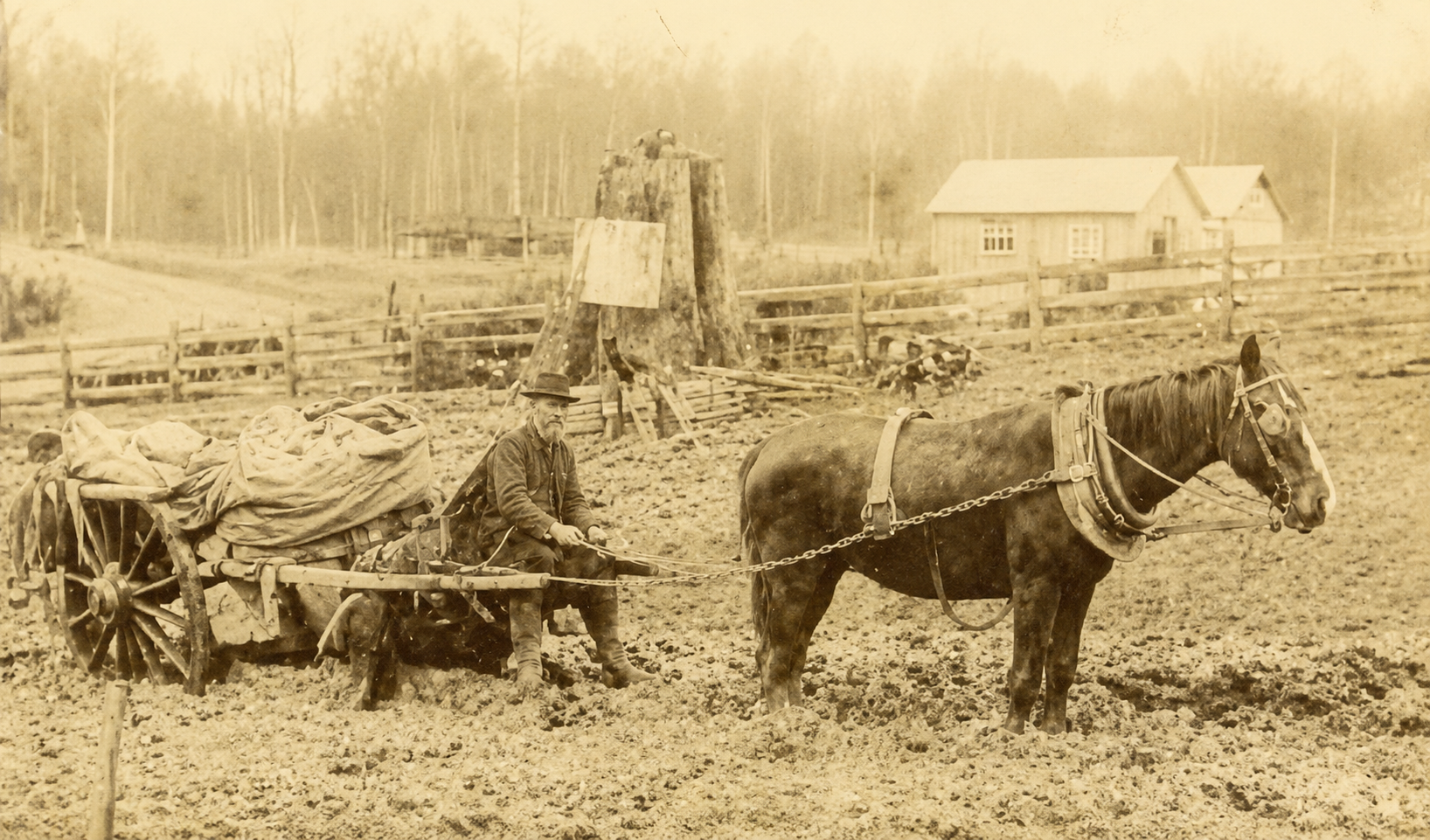
1892 Commercial Street, Korumburra. Source: K&DHS
By Marion Shuttleworth
“Corduroy roads”, named for their resemblance to the fabric, have been around since Roman times or earlier, and have been utilised across the world. They consist of lengths of wood placed horizontally across a road to improve the surface. Here, in South Gippsland, they were used to keep the early settlers out of the mud. Pack Tracks were cut through the Great Forest, and this meant there was a ready supply of timber that could be used for this purpose.
The pack tracks and roads of South Gippsland were notorious for mud. Corduroy was often employed to manage this but, inevitably, huge muddy holes appeared at either end of a stretch of corduroy which caused more challenges for the traveller. The stretches of corduroy could be anything from a few yards to a mile in length. The mud was such that often sleds were employed instead of carts to transport goods as these could glide over the mud and corduroy better than wheels.
In “The Land of the Lyrebird”, Mr. T.J. Coverdale wrote “Spars of six or eight inches in diameter were cut into lengths of eight or ten feet, and laid close together, transversely to the road, along the worst stretches. The result as a liver stimulant was hard to beat, but as a road it left much to be desired”.
Such was their significance to the development of Australia that remnants of corduroy road have been listed on state heritage registers:
The Corduroy Road Ruins Historic Site, East Coonamble Road, Curban, Gilgandra Shire, New South Wales.
Corduroy Road, Toowoomba-Ipswich Road, Laidley, Lockyer Valley Region, Queensland.
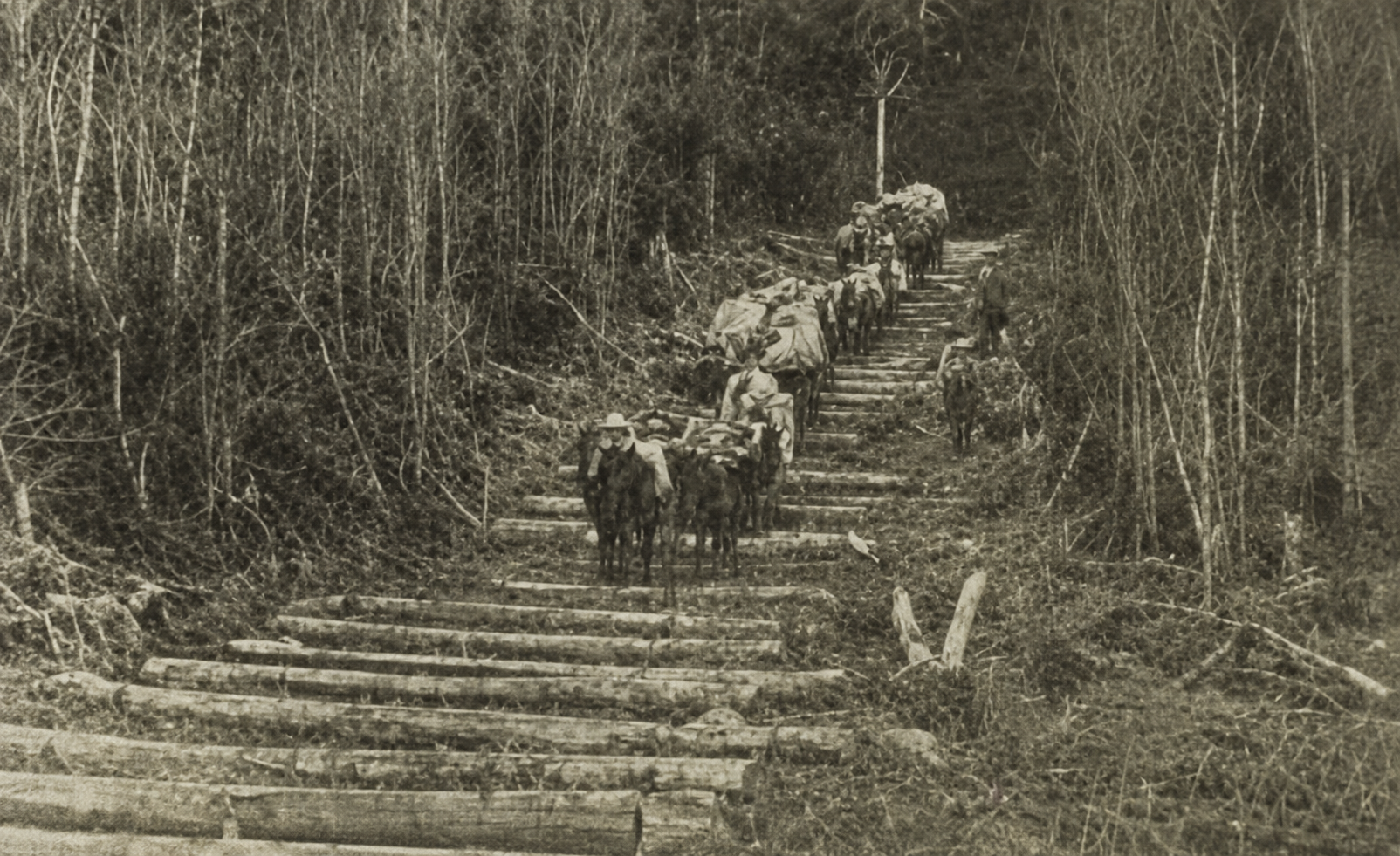
Bullock team pulling a wagon or sled along a corduroy road. Location: unknown. Source: K&DHS
Further afield there are multiple images of corduroy roads available to view on the Australian War Memorial website. They were constructed on the Western Front during World War I, and across South-East Asia during World War II.
Back in South Gippsland it is easy to understand why the pioneers fought so hard for a railway. In the early days goods were brought into the area via the pack tracks, but it was a slow and uncertain process. The ability to send perishable produce to Melbourne and beyond was limited due to transportation time. Anyone unlucky enough to suffer serious illness or injury faced an agonising journey to access healthcare. The arrival of the railway brought certainty and prosperity as journeys that had previously taken many days could be completed in hours and in much more comfort. However, pack tracks and ‘corduroy road’ continued to play a role in the area for many decades as roads were gradually formed and metalled.
It is interesting to reflect on the fact that we still complain about the ‘state of the roads’ to this day!
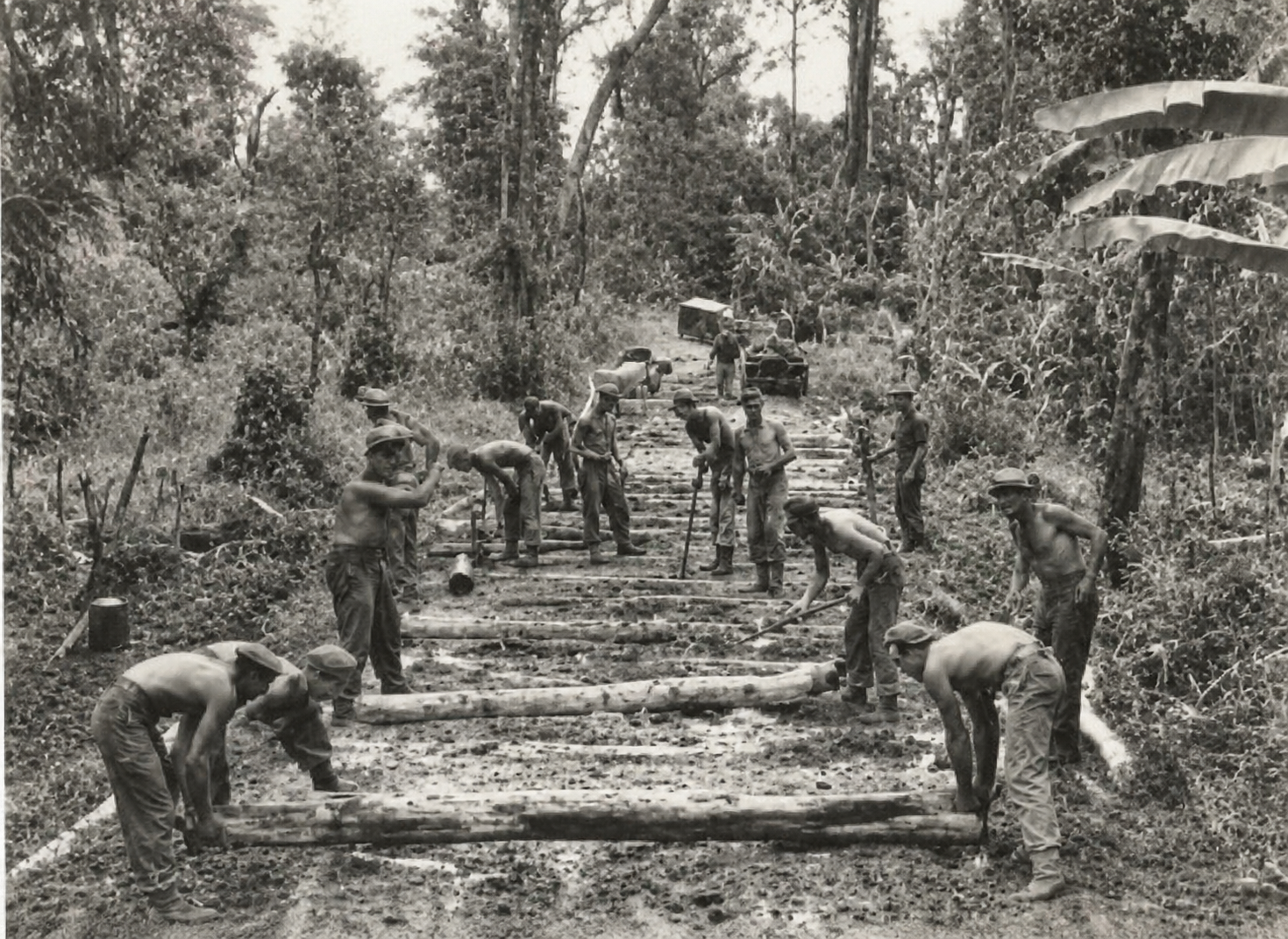
1945 Bougainville Island. Pioneers of the 9th infantry battalion building a corduroy road through the jungle. Source: Australian War Memorial
0 Comments