 By Marion Shuttleworth
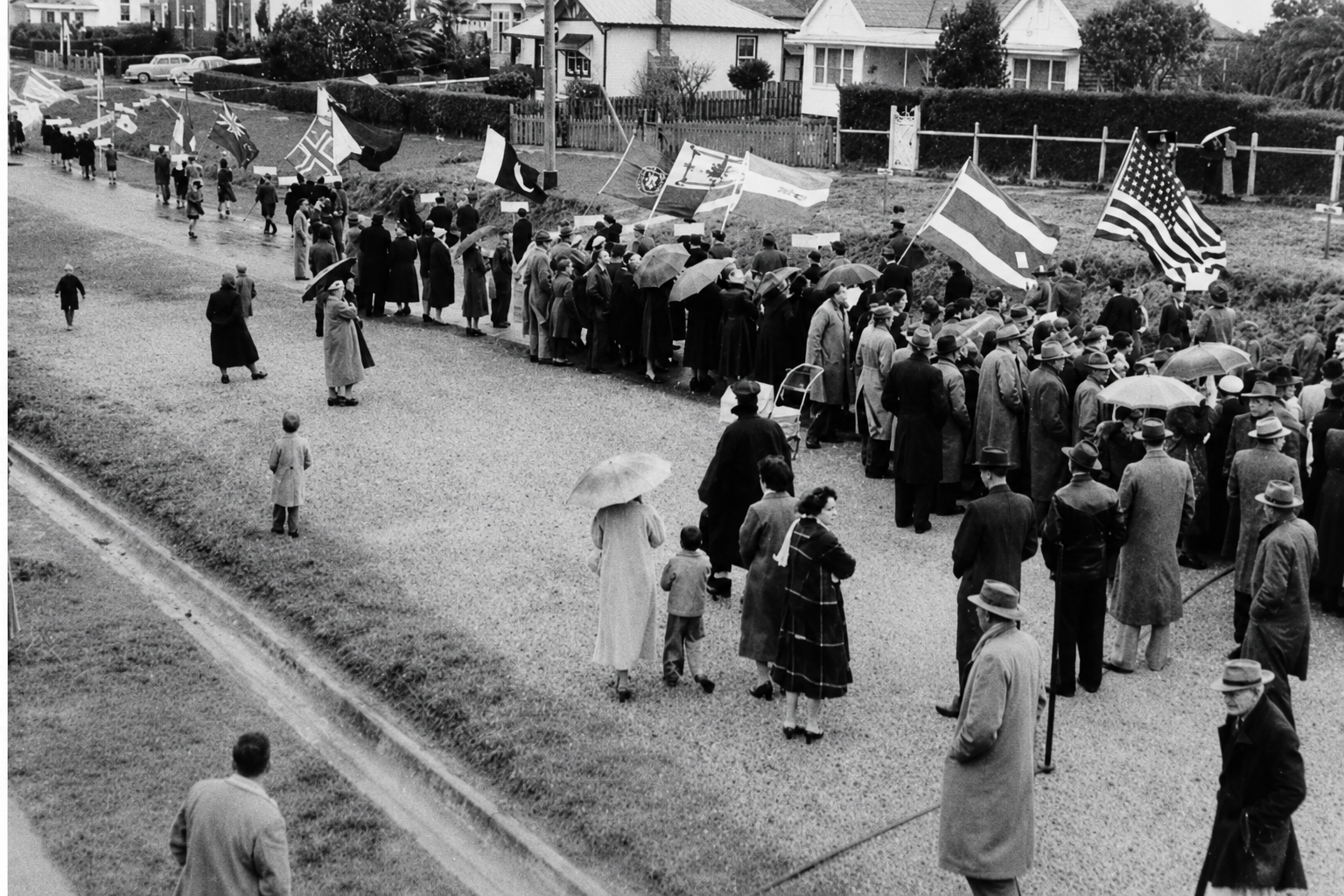
Have you ever noticed the mismatched trees that line Bridge Street between Princes Street and Mine Road? They are in stark contrast to the orderly avenues of trees that grace the surrounding streets. A stroll along Bridge Street reveals three different species of oak, along with various cedars and firs, a flowering cherry, a gingko, a Magnolia grandiflora, and more. It looks like someone walked into a tree farm and bought one of everything. And, indeed, that is almost the case. The Argus newspaper reports that in August 1956 Korumburra was “host to the world” when a thousand residents witnessed consuls and representatives from forty-three countries planting a tree native to their country in Bridge Street. This significant avenue of trees is dedicated to the pioneers of nations with membership of Rotary International. It was organised by Jim Proudfoot, a past president of the Korumburra Rotary Club. At the time Mr Proudfoot said “These trees will grow in peace, and may the nations represented grow likewise.” Sir Angus Mitchell, Australia’s first president of Rotary International planted the international tree, Stenocarpus sinuatus (Firewheel tree), opposite St. Joseph’s School where it flowers to this day. Dennis Conn was a pupil at the State School at the time and well remembers the excitement of the day: a parade of flags, a brass band, and trees being planted. Two years later in July 1958 there was more excitement when the then Prime Minister, Robert Menzies, visited Korumburra and planted a tree to complete the avenue.
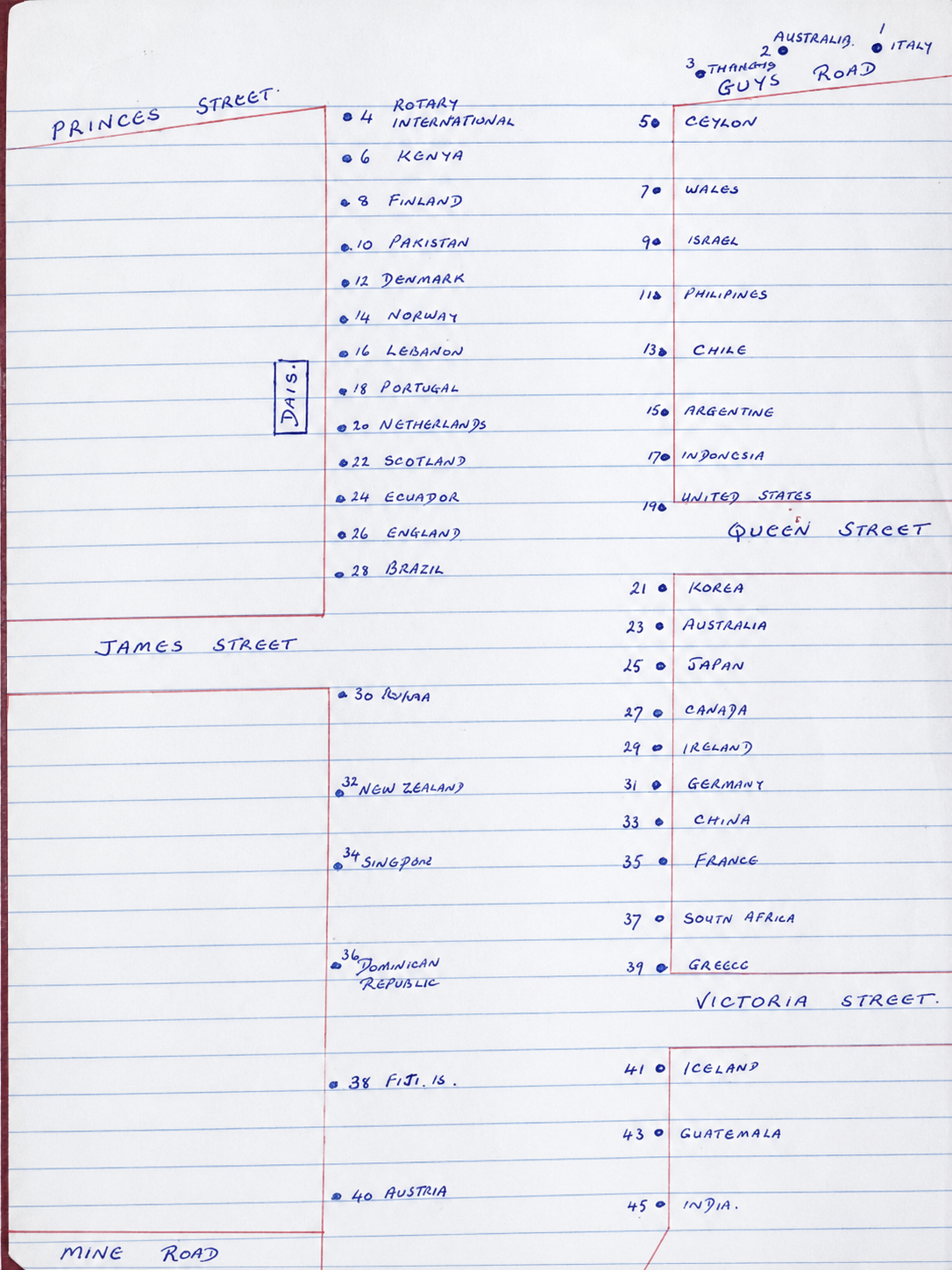
It is almost 70 years since “International Avenue” was planted and, while there has been change, much has been retained. Global change means some countries, such as Ceylon and Nyasaland, have new names. Locally the history of this avenue appears to have been lost from common knowledge. While many of the trees, such as Metasequoia glyptostroboides (Dawn Redwood) have not been able to reach their full potential because of the power lines it is encouraging to see that when trees have needed to be replaced that has been done with reference to the original intention. Rare species including Liriodendron tulipifera (Tulip Tree) and Arbutus unedo (Strawberry Tree) remain. It will come as no surprise that England planted an English Oak and Canada a maple, but some of the other choices are more obscure. Sadly, some trees are missing altogether. One such is the Lagerstroemia indica planted by India which, coincidentally, was originally located directly outside what is now Divas Tandoori Indian Restaurant.
The Korumburra and District Historical Society has copies of the original tree list and plan for the avenue but it appears these were not strictly adhered to. We hope to be able to provide a map of the avenue reflecting the current situation in a later newsletter.
It is extraordinary to think that forty-three nations came together co-operatively on a winter’s day in Korumburra to plant trees. “International Avenue” deserves to be remembered, and to be seen as was intended, an enduring symbol of peace and friendship.
Acknowledgements: Thank you to Alwyn Michie and Linda Fisher for their assistance with research, to Dennis Conn for sharing his recollections.
0 Comments