By Marion Shuttleworth
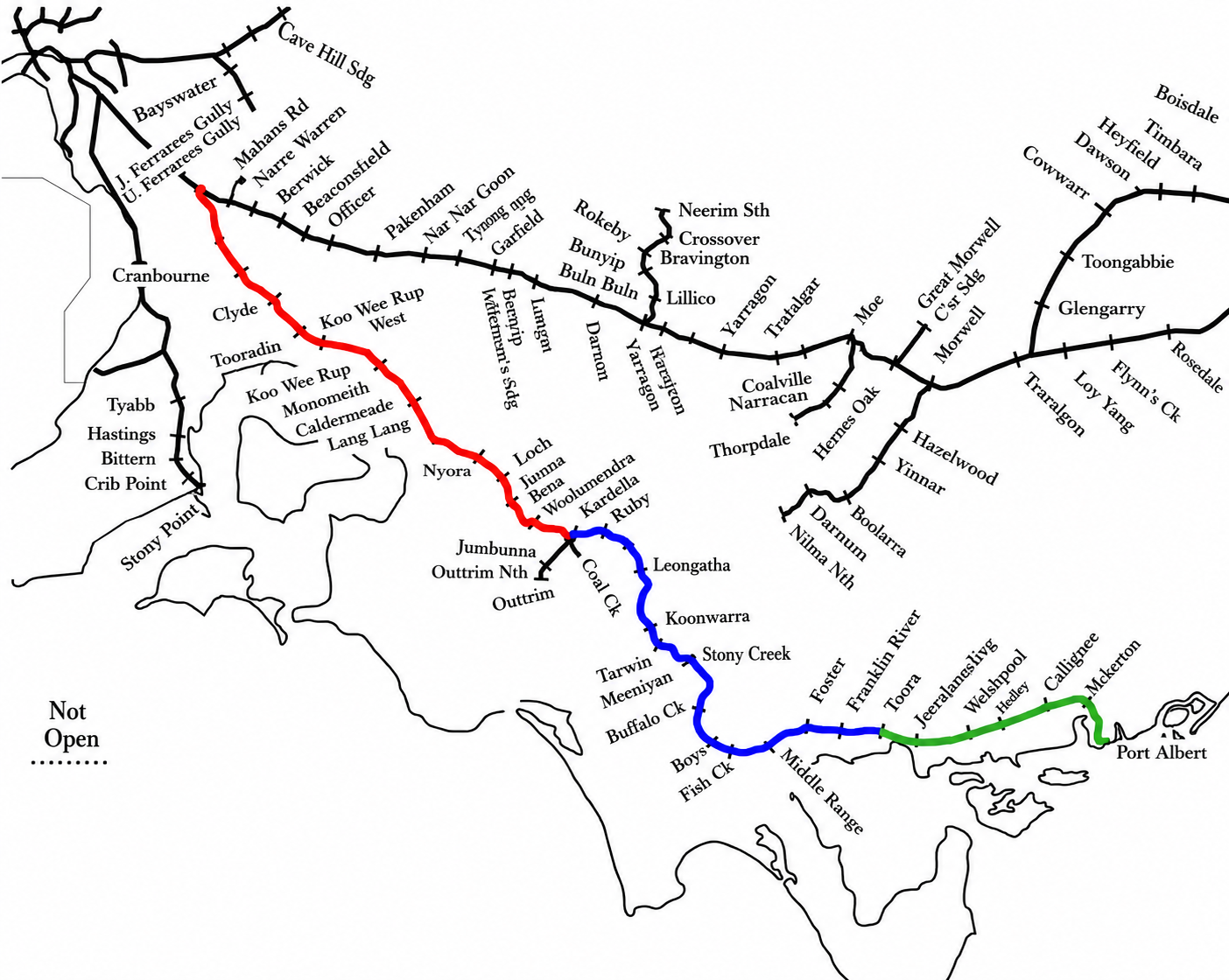
The Great Southern Line ran from Dandenong to Port Albert and was built in sections from 1887 to 1892, by three different contractors.
The line and associated infrastructure cost in the region of £1,000,000. It is impossible to overstate the importance of the railway to the development of South Gippsland. Prior to the railway the only access was via muddy pack tracks through the Great Forest, a dense forest of towering trees with an understory of tangled scrub. The ‘Octopus’ Act of Parliament, 1884, authorised the building of the line, not only giving hope to farmers but giving coal mining syndicates in Korumburra the confidence to establish mines. Rival communities competed for the line but in the end only one route proved possible given the steep hills and gullies of the Strzelecki Ranges. The anticipated arrival of the railway gave birth to towns along its agreed route.
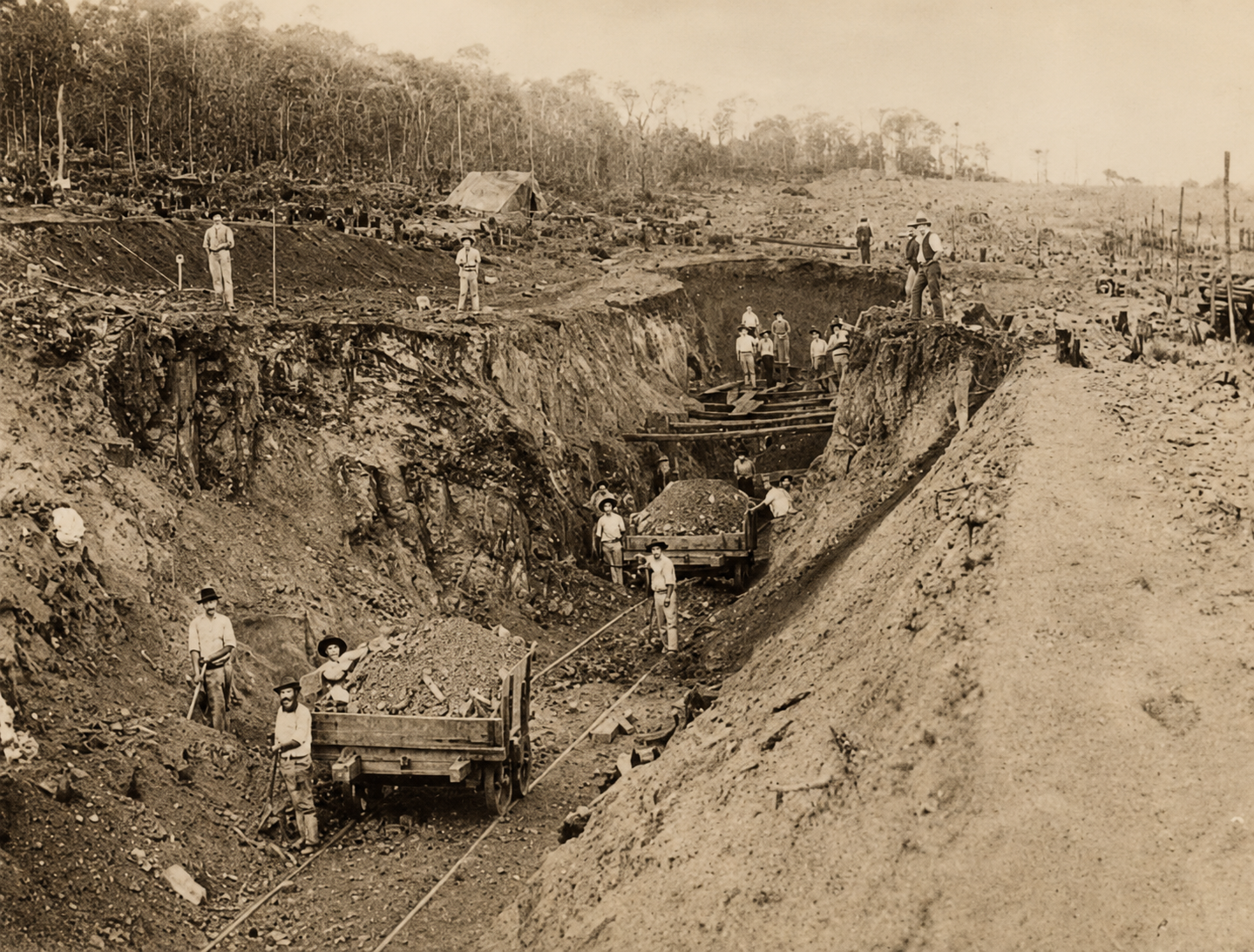
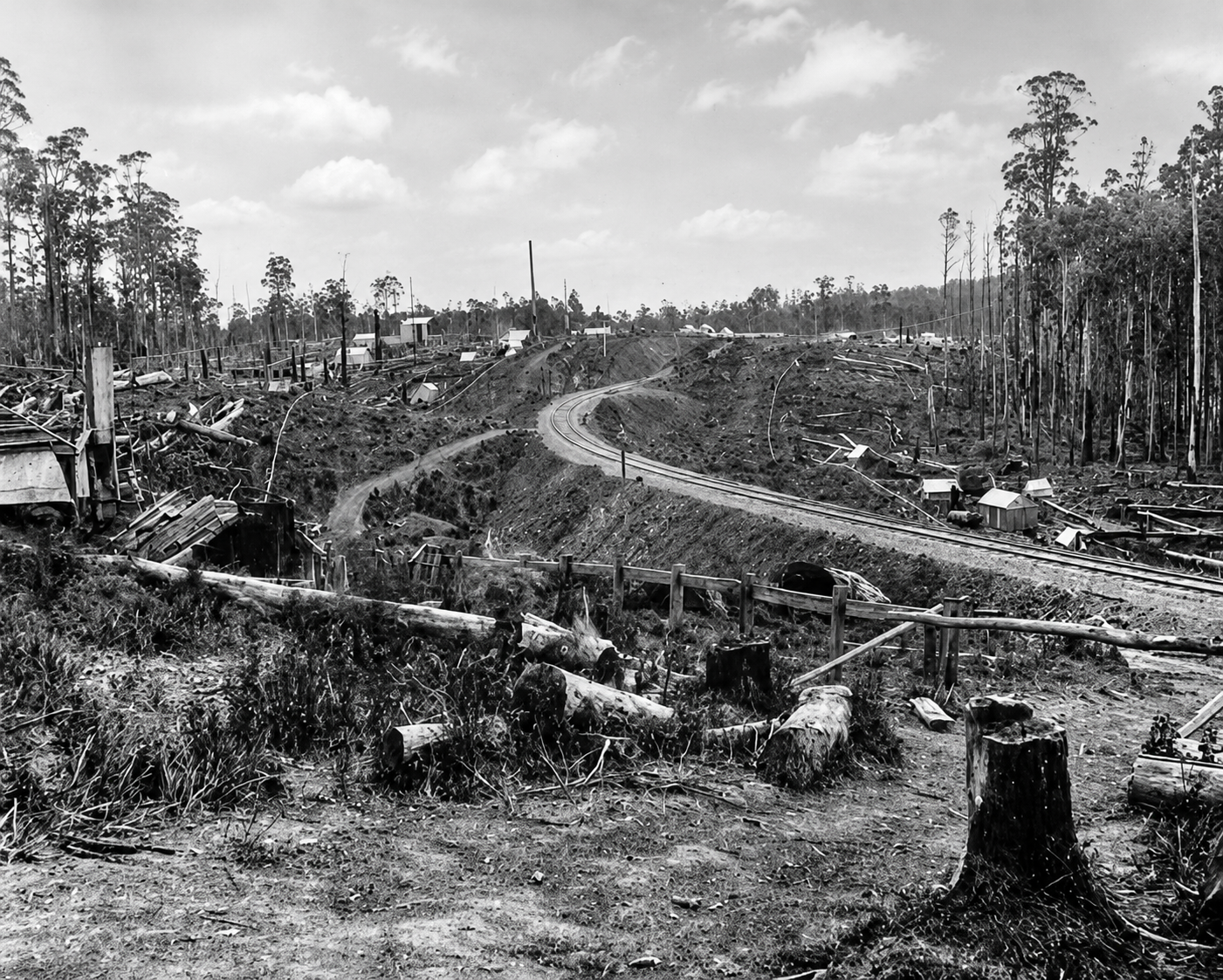
The Dandenong to Whitelaw’s Track (Korumburra) section was contracted to Falkingham & Sons and work started in January 1887. From the outset Falkingham experienced almost insurmountable difficulties as the line had to be built through swamp and forest, and negotiate some of the steepest rail gradients and tightest curves in the state. The 1889 Royal Commission into coal mining identified the need to secure Victoria’s coal supply through the coalfields of the Korumburra area, giving further urgency to the railway. Falkingham finally rolled into Korumburra in June 1891, almost three years late. The Victorian Government fined him for running behind schedule and, in return, he successfully sued the government for failures that contributed to his difficulties!
The Toora to Korumburra section was contracted to O’Keefe who, despite significant challenges, managed to progress at a better pace than Falkingham. Commencing his section of the line at Toora necessitated all supplies being brought in by sea, requiring him to build a wharf at Port Franklin. He then had to negotiate the Hoddle Range and the eastern Strzelecki Ranges, as well as build many bridges. Construction commenced in 1889 and by May 1891 O’Keefe had completed the steep climb into Korumburra.
The third section from Toora to Port Albert was the most straightforward section and contracted to Buckley and Sons. The completion of the line meant that the local fishing industry could now transport their catch to Melbourne in time for the morning markets.
There is no official record of the number of deaths and injuries that occurred during construction of the line but there were many, caused by falling trees, accidents with explosives, collapsing earthworks, infectious diseases in the construction camps, and the movement of trains and rolling stock.
Korumburra at the highest point on the line became the major depot station and was a busy place with up to nine coal trains a day leaving the station during maximum production. People could now travel to and from Melbourne in a matter of hours rather than days, meaning passenger services were well patronised.
Coal mining declined within a decade but the bourgeoning dairy industry took full advantage of the vast improvement in transportation with the towns of Korumburra, Leongatha, Foster, and Yarram becoming service centres for the region. Dairying and other agricultural industries remain major contributors to the prosperity of South Gippsland.
The growth of private car ownership reduced passenger patronage and, increasingly, goods were transported by road. Sections of line and smaller stations were closed from the 1940s, as demand for rail services dropped. Diesel electric trains replaced steam trains in the 1960s. Eventually, after more than 100 years of operation, the line was closed completely in 1994. From 1994 to 2016 the Nyora to Leongatha section was operated as a tourist railway.
With the opening of the Great Southern Rail Trail the towns of the Great Southern Line are once again connected by travel along the line, allowing residents and visitors to immerse themselves in a landscape once defined by the sounds of steam.
0 Comments